 Meal Matcher
 Hit protein without guesswork
Planning upfront makes it easier to spread protein across breakfast, lunch, dinner, and snacks.
Protein meal planning
Build a week of meals around your protein goal, calorie target, diet, disliked foods, and the ingredients you already have.
Why planning matters
Most people can find one high-protein dinner. The harder part is making the whole week add up without repeating the same foods or overspending.
Planning upfront makes it easier to spread protein across breakfast, lunch, dinner, and snacks.
Protein targets should work with your calorie goal, not push the whole day out of range.
A linked shopping list helps you buy the right ingredients instead of improvising every evening.
The goal is a sustainable week, not chicken and rice on a loop.
| Goal | Meal Matcher helps by | Useful examples |
|---|---|---|
| Weight loss | Plans meals around a calorie target while keeping protein visible. | Lean dinners, protein breakfasts, controlled snacks. |
| Muscle gain | Keeps bigger portions and higher protein days organised. | Higher-calorie lunches, post-training dinners, batch-friendly meals. |
| Busy weeks | Builds a full plan and shopping list so protein does not depend on last-minute choices. | Meal prep lunches, quick dinners, repeatable staples. |
Meal Matcher
Set your target, choose the structure of your day, and turn the plan into a shopping list without rebuilding every ingredient manually.
Like these meal ideas?
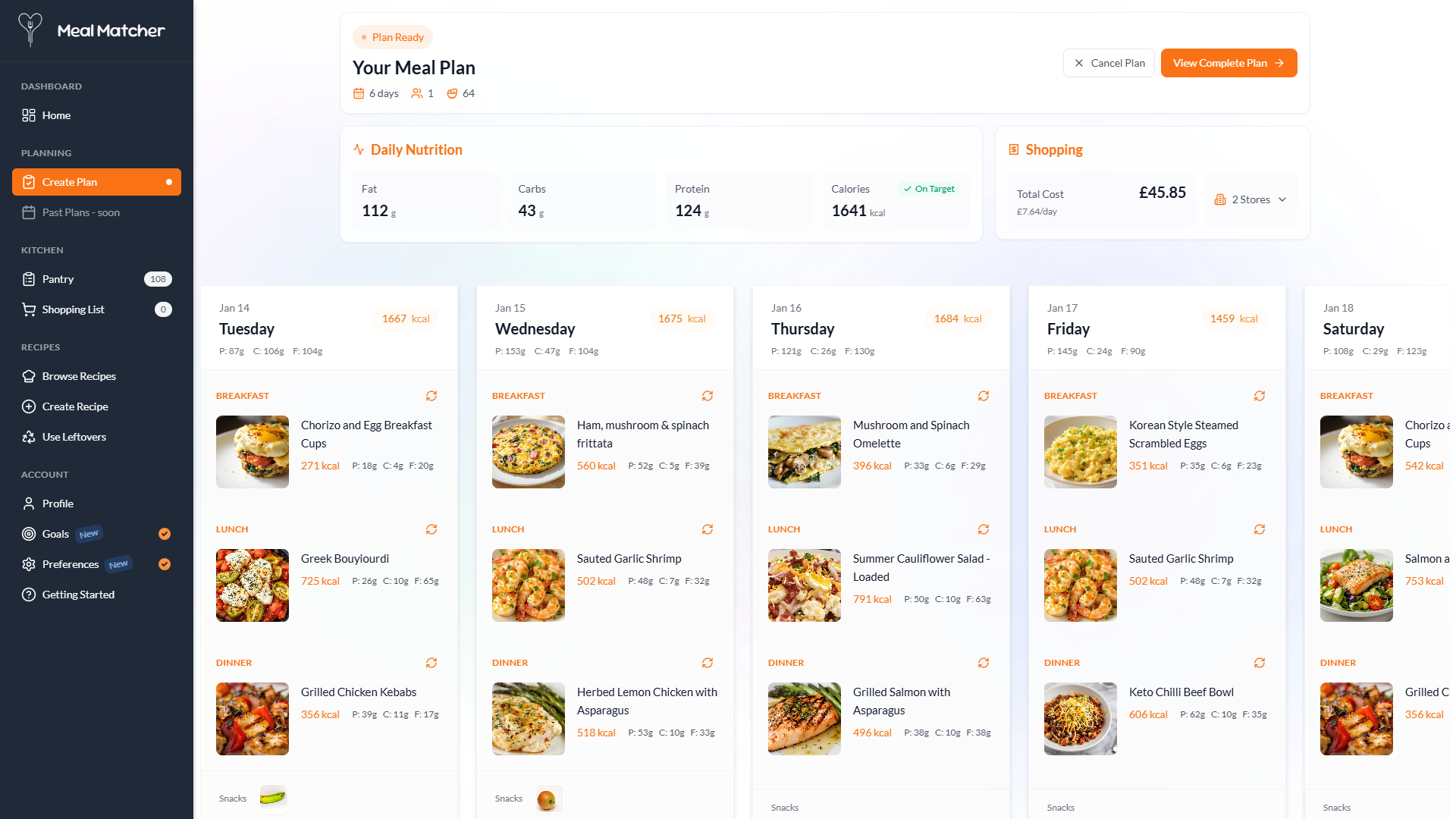
Set your calorie and protein targets, browse meals that fit your preferences, and choose the recipes you want across the week.
FAQ
A high protein plan deliberately spreads protein across the day instead of leaving it to one large meal. The right amount depends on your body, goals, and activity.
Yes. You can plan around diet preferences and choose recipes that fit your goals.
No. Planning helps because you can reuse ingredients, compare shops, and avoid buying separate one-off items for every meal.
Related guides