Tesco Food Prices Rising? Data Shows Where Costs Are Increasing Most
Quick Answer
Tesco’s mapped average price has risen from £2.20 in February 2024 to £2.33 in April 2026, but the path has been volatile. The biggest pressure is in protein, oils and fats, and dairy, while cheaper staples such as tuna, pasta, and some condiments have held steadier or even fallen at the lower end.
Tesco price movements are uneven rather than uniform, and the clearest pattern is in the Tesco average price history and category changes. Some staples have stayed steady at the cheaper end, while protein, dairy, and oils and fats have moved up more noticeably, especially in the higher-priced parts of those ranges.
What does Tesco’s price history show?
Tesco’s mapped dataset is much smaller than its full catalogue, so it gives a view of staple items and comparable products rather than the whole shop. That matters, because the mapped average price of £2.39 sits well below the broader supermarket average shown in the scan, £4.43. The gap suggests the mapped set is weighted towards everyday items and own-label comparators.
Across the history series, Tesco’s average mapped price has moved from £2.20 on 2024-02-29 to £2.33 on 2026-04-20. The route has not been smooth, with a low point of £1.88 on 2024-08-01 and a later recovery. In plain terms, Tesco’s average is higher than it was at the start of the series, but not by a huge amount.
Total products: 21,249
Mapped products: 860
Mapped ingredients: 223
Latest mapped average price: £2.33
Broad supermarket average in scan: £4.43
Which Tesco categories have risen most?
The biggest story is not a single across-the-board increase. Instead, Tesco shows a split between categories with firmer rises and categories where low-cost items have stayed relatively stable. Protein stands out most clearly, followed by oils and fats and dairy.
Protein
Average: £3.72 latest, up from £3.27 earliest, a rise of 13.76%.
This is the category where increases are most noticeable. The cheapest item stayed flat at £0.55, but higher-end items moved up sharply. That points to price pressure being concentrated in meat, fish, and premium cuts rather than the lowest-cost canned end.
Organic Beef Steak Mince 15% Fat 500G, +61.9%
British Lamb Mince 10% Fat 250G, +51.9%
Diced Chicken Breast Fillets 640G, +44.0%
Beef Steak Mince 15% Fat 500G, +43.94%
Haddock Fillets 360G, +37.5%
Oils and Fats
Average: £5.84 latest, up from £5.50 earliest, a rise of 6.18%.
The category average is higher, but the cheapest item actually fell from £1.85 to £1.65. That means the spread is being driven by the higher end, where larger or branded formats sit at much steeper prices.
Dairy
Average: £2.48 latest, up from £2.28 earliest, a rise of 8.77%.
Dairy is another area where the average is drifting upwards while the cheapest end has not moved. That often happens when premium and larger-pack products rise faster than basic milk, butter, or cheese lines.
Grains and Pasta
Average: £2.16 latest, up from £2.08 earliest, a rise of 3.85%.
This is a steadier category overall. The cheapest item stayed at £0.28, which suggests Tesco has kept some entry-level pasta and grain options firmly in place.
Where have the cheapest Tesco items stayed stable?
Some of Tesco’s core staples have not moved much at the bottom end. That is useful for shoppers trying to keep baskets affordable, because it shows where Tesco has kept a low-price anchor in place.
Protein: the cheapest item stayed at £0.55
Grains and Pasta: the cheapest item stayed at £0.28
Vegetables: the cheapest item moved only slightly, from £0.10 to £0.11
Spices and Herbs: the cheapest item moved from £0.52 to £0.50
There are also categories where the lower end has actually come down. Condiments and Sauces saw the cheapest item fall from £0.59 to £0.44, while Fruits dropped from £0.24 to £0.16. That does not mean every item is cheaper, but it does show Tesco still has low-cost options in some areas.
Why do some ingredient spreads look so wide?
The most striking ingredient spreads in Tesco are in dried herbs, spice blends, and condiments. These are often the categories where own-label budget packs sit next to branded jars, larger formats, or premium versions with very different prices per 100g.
That creates a wide spread for shoppers, especially if they compare raw pack price rather than unit price. A small own-label jar can look cheap on the shelf, while a larger branded format can carry a much higher headline cost. The biggest outlier mentioned in the briefing is Dried Basil, with a current spread of £6.95 per 100g.
For practical shopping, this means two things:
Check the price per 100g or 100ml, not just the pack price.
Compare Tesco own-label basics with branded versions only if you need a particular format or flavour profile.
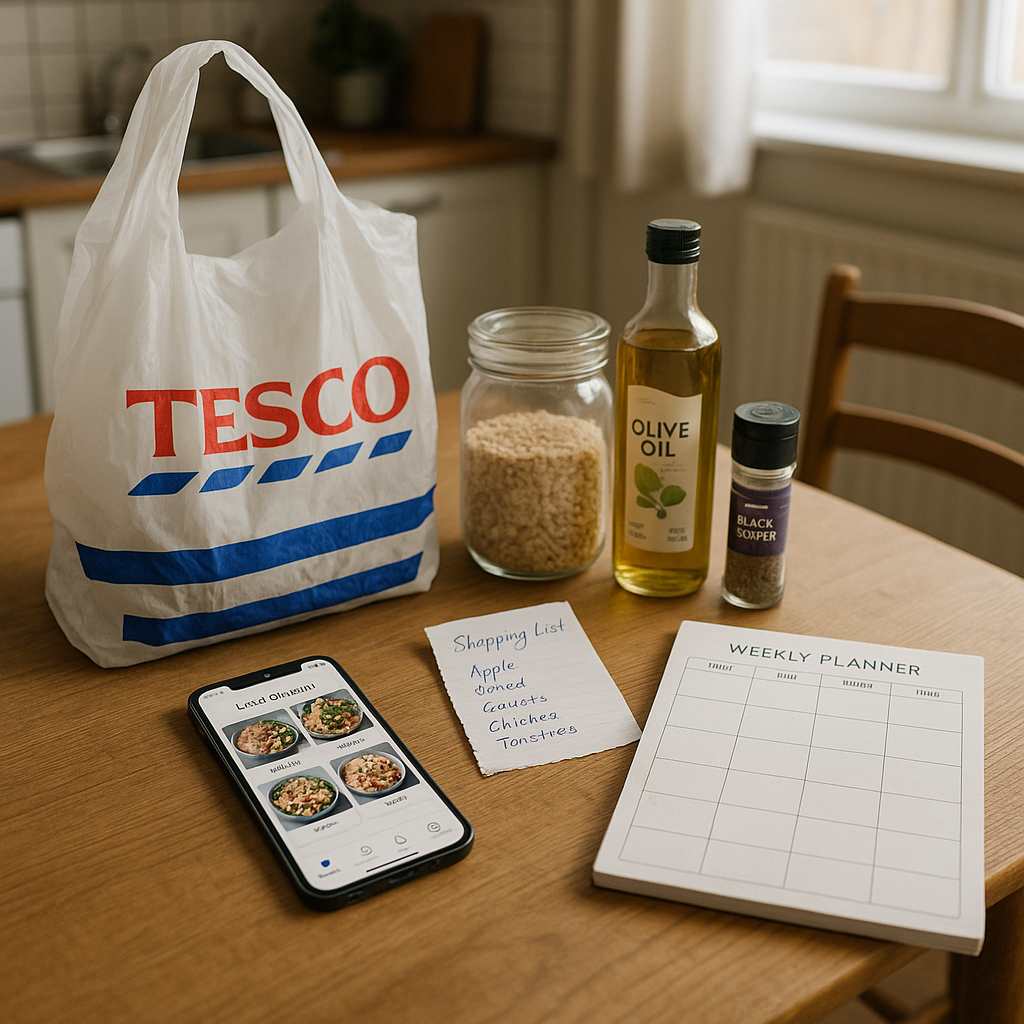
If you want to compare Tesco prices against other UK supermarkets, try our free tool to make the process simpler.
What does this mean for budget shopping at Tesco?
The main takeaway is that Tesco’s price pressure is concentrated, not universal. If you shop the cheapest end of the range, there are still low-cost options in pasta, some vegetables, condiments, and tinned protein. If you buy meat, fish, oils, or some dairy lines, you are more likely to see higher prices than you did earlier in the series.
For everyday meal planning, that usually means building baskets around the steadier categories first, then using smaller amounts of the pricier ones. It is a practical way to keep spend down without relying on one category alone.
How to shop Tesco more cheaply using this price pattern
Start with stable staples. Use pasta, grains, tinned tuna, basic vegetables, and simple sauces as the base of the meal.
Use protein more strategically. Choose smaller portions of meat or fish, or mix them with beans, lentils, or eggs where suitable.
Compare unit prices. This matters most in oils, herbs, condiments, and premium jars, where pack sizes vary a lot.
Watch the top end of categories. The biggest rises are often in premium or larger-format products, not the cheapest shelf option.
Build meals around what is steady. Pasta bakes, rice bowls, soups, and traybakes can all be kept more affordable if you choose the lower-cost versions of key ingredients.
Frequently asked questions
Has Tesco’s average price gone up overall?
Yes, but only modestly in the mapped series. The average moved from £2.20 to £2.33 over the period shown, with some sharp dips and recoveries in between.
Which Tesco category has risen the most?
Protein has risen the most clearly in the briefing. The average is up 13.76%, and several beef, lamb, chicken, and fish items have seen double-digit increases.
Are Tesco’s cheapest products still cheap?
Many are. The lowest-priced items in protein, grains and pasta, vegetables, spices and herbs, and condiments have stayed relatively stable, and in some cases have fallen slightly.
What should shoppers watch most closely?
Watch meat, fish, oils, and some dairy lines, especially if you usually buy larger packs or branded versions. Those are the areas where the briefing shows the strongest upward movement.
If you want to keep a Tesco shop under control, the most useful habit is to compare the cheapest items in each category rather than assuming the whole range has moved the same way. The data shows Tesco still has budget options, but the pressure is uneven and highest where many households spend the most.
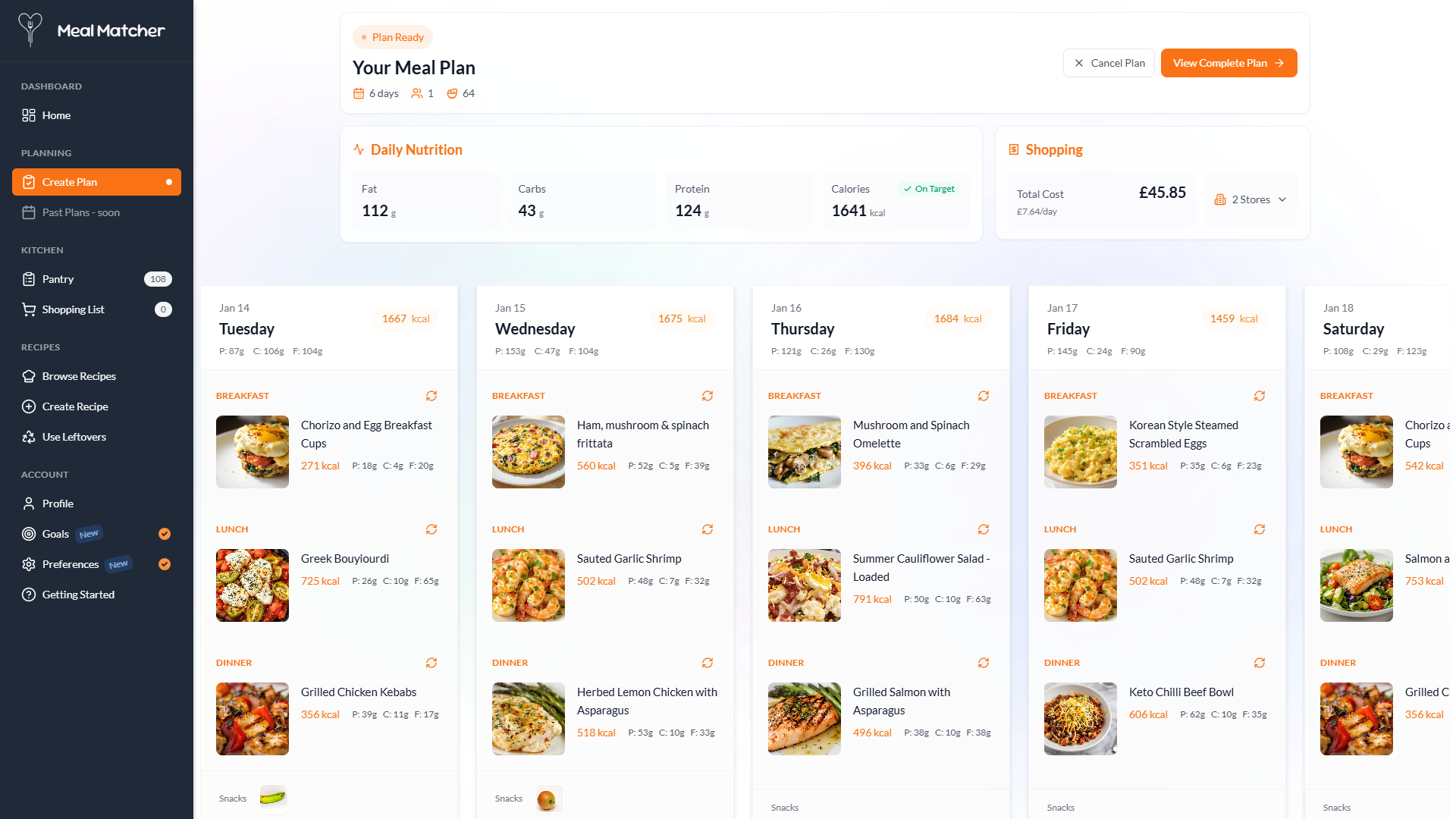
Stop planning meals in your head
Turn what you just read into an actual week of meals.
Meal Matcher builds a personalised week around your calories, diet, allergies and dislikes, then turns it into one organised UK shopping list.