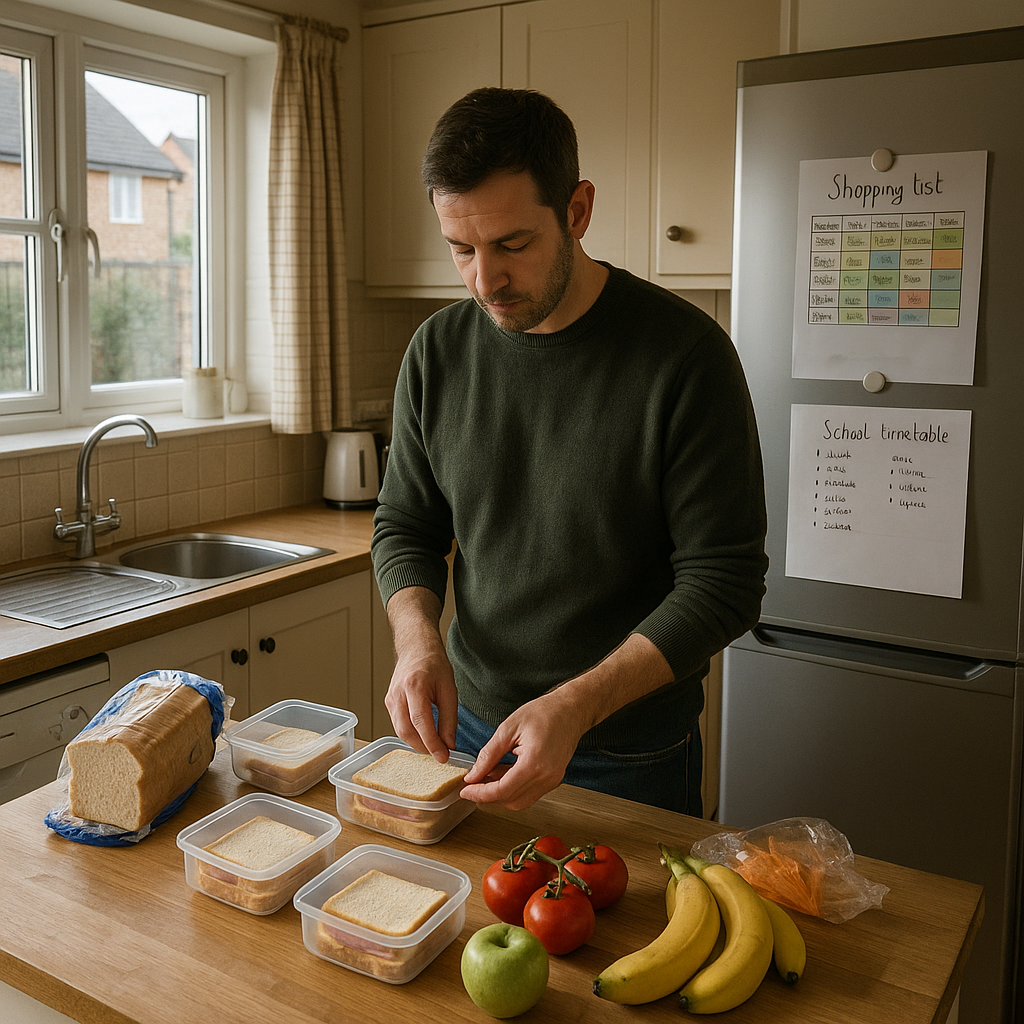
New school food standards in England: what parents can do with meal planning this term
Quick Answer
If you are a parent in England, the new school food standards are a good reason to reset your term-time meal plan. Keep lunchbox options repeatable, plan dinners around school days rather than weekends, and build a tighter shopping list so you are not buying extra food that never gets used.
New school food standards in England are a useful prompt for parents who are trying to keep school weeks calm, affordable and less last-minute. The main change is simple enough: school food rules are tightening, and that affects what children may be eating at school as well as how families plan around packed lunches, dinners and the weekly shop.
For most households, the practical issue is not the policy itself. It is the knock-on effect on lunchbox habits, after-school hunger and how much decision-making gets crammed into a school night.
What changed in the school food rules?
According to GOV.UK blogs, England has new school food standards for schools to follow. The BBC also reported that deep-fried food is banned under the updated rules. Those are the reported facts. The useful inference for families is that school meals may look a little different, so it is worth checking what your child is actually coming home hungry for before you change your own routine.
You do not need to become a policy expert. You do need to know whether your child has school dinners, packed lunches, or a mix of both across the week. That changes what you buy, what you prep and how much food you keep in the cupboard for busy evenings.
Why does it matter for family meal planning?
School weeks usually fail at the edges. Breakfast runs late, lunchboxes need assembling, and tea has to happen between homework, clubs and tired children who suddenly want pasta now. New school food standards can sharpen that pressure if your old routine depended on school meal expectations that no longer quite fit.
The main planning job is to stop treating each meal as separate. If you know what goes in the lunchbox, what gets eaten at school, and what time dinner needs to be on the table, you can buy and cook once with more purpose.
That matters for three everyday reasons:
- you waste less food because the same ingredients do more than one job
- you avoid doubling up on snacks, sides and emergency convenience food
- you make school nights easier because dinner is already half-planned
How should you adjust lunchboxes and packed lunches?
If your child takes a packed lunch, the goal is not perfection. It is a lunchbox you can repeat without thinking too hard every morning. That is the bit most parents actually need.
Start with a short list of dependable items and rotate them. For example:
- a sandwich or wrap filling you know your child will eat
- a fruit option that travels well
- a snack that does not need much prep
- one flexible protein item, such as cheese, eggs or hummus, depending on your household preferences
If school dinners are now different from what you expected, you may find your child comes home hungrier on some days and less hungry on others. The practical move is to keep a few quick after-school options in the fridge rather than relying on a full second cooking session. Think yoghurt, fruit, toast toppings or leftovers that can be reheated fast.
How can you plan dinners around school timetables?
School nights are not the best place for ambition. They are the place for repeatable meals that you can cook while answering a question about a PE kit.
A better term-time pattern is to match dinner types to the energy level of the day:
- busy days: traybakes, pasta, soups, jacket potatoes or anything that mostly cooks itself
- moderate days: stir-fries, simple curries, fish with frozen veg, or a grain bowl built from leftovers
- calmer evenings: meals that take a bit more chopping or washing up
This is also where repeat ingredients help. If you buy chicken, beans, rice and vegetables for one meal, try to use them again in another meal before the week ends. That makes the shop more efficient and reduces the odds of half a cucumber sulking in the fridge.
How do you budget for term time without overbuying?
Term time spending often creeps up because parents buy for the week they imagine, not the week they live. One child rejects a packed lunch filling, another suddenly wants different snacks, and the cupboard ends up holding three half-used packets of something nobody wants.
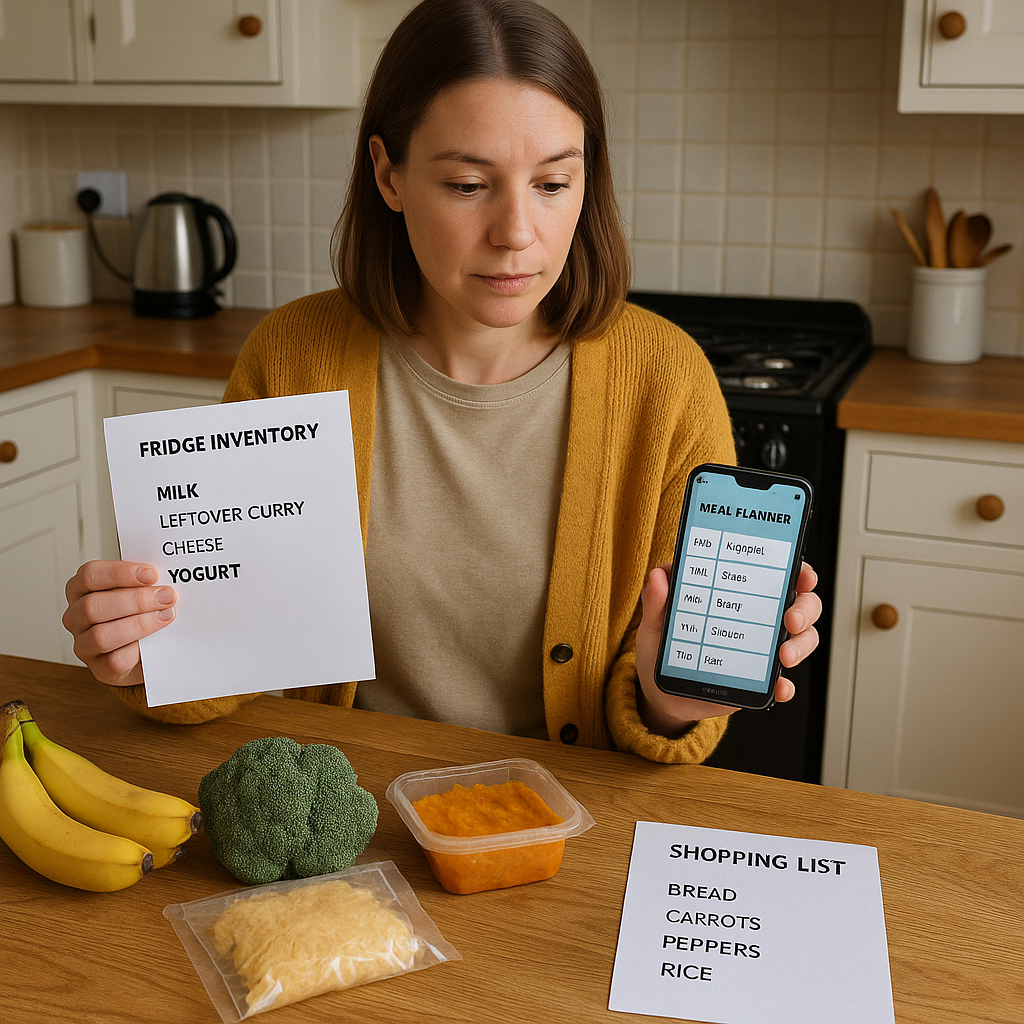
A steadier approach is to shop from a plan, then check it against what is already in the house. If you already have pasta, tinned tomatoes and frozen vegetables, build meals around them before adding more to the basket. That is plain budget control, not cleverness.
If you want to compare what you already own with what you still need, the Ingredient Matcher can help you spot meals that fit the ingredients in your kitchen before you buy more. If you are deciding between a few possible shops or want to see which basket suits the week best, use the shopping list comparator to keep the list tighter.
What should parents do this week?
Keep this simple. The point is to reduce friction, not to build a perfect family food system by Thursday.
- Check whether your child is on school dinners, packed lunches, or both.
- Pick three lunchbox options you can repeat without stress.
- Choose two or three school-night dinners that fit your busiest evenings.
- Use leftovers on purpose, not by accident.
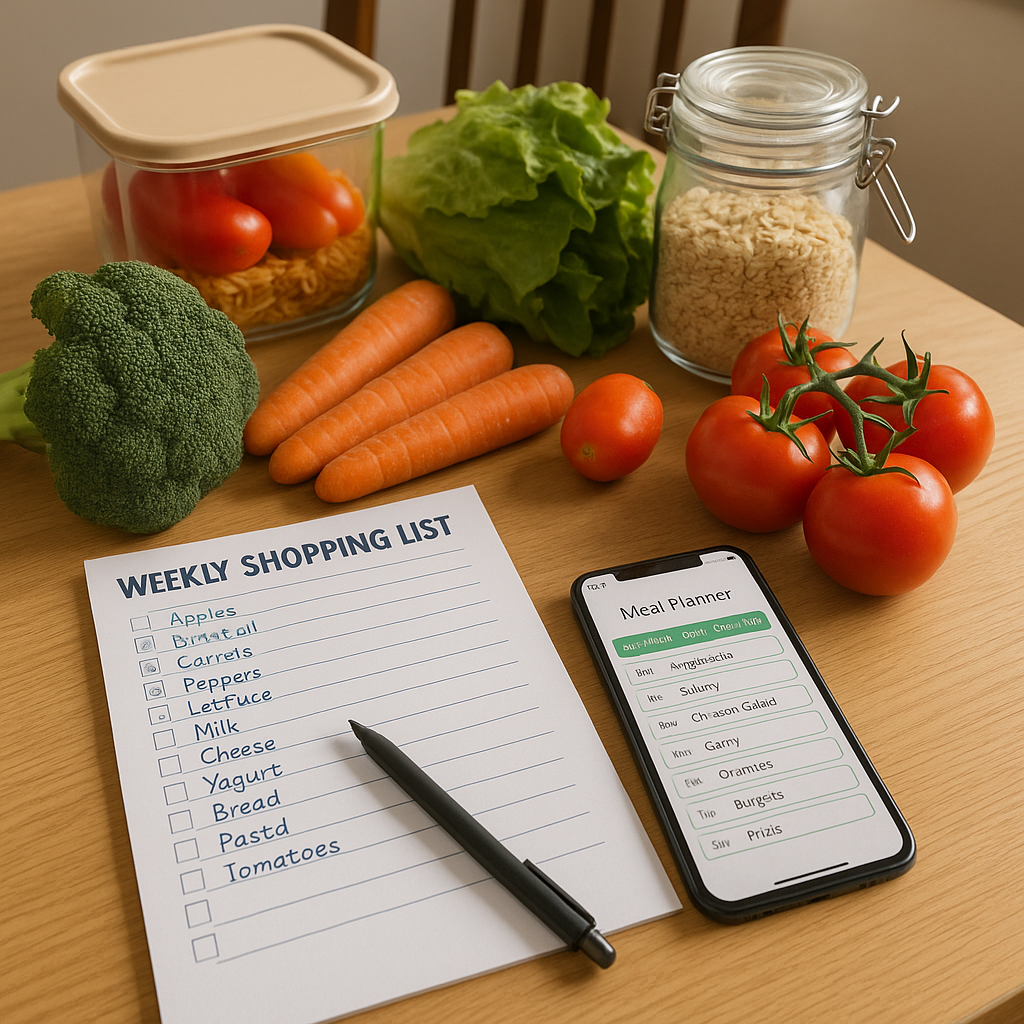
- Write the shopping list from the meal plan, then cut anything you do not need.
If you do those five things, you will already be ahead of most term-time chaos. The new standards may be the trigger, but the real win is a week that feels less improvised.
Why this topic is in the news
This draft responds to current coverage from GOV.UK blogs, BBC. The practical meal-planning suggestions are MealMatcher's interpretation for UK home cooks.
Frequently asked questions
Do the new school food standards mean I need to change packed lunches?
Not directly. Packed lunches are your own decision, but the policy change is still a good moment to review what your child actually eats at school and whether the current lunchbox is working.
Should I plan dinners differently if my child has school meals?
Yes, a bit. If school dinners are the main lunch option, your child may need different after-school snacks or a heartier evening meal depending on how the day goes.
How can I keep term-time food costs under control?
Plan the week before you shop, use ingredients across more than one meal, and avoid buying extra convenience food for emergencies that never quite happen.
What is the easiest way to start?
Choose three repeatable lunches and three repeatable school-night dinners, then build your shopping list around those. Small, repeatable decisions save more time than trying to reinvent the week.
If school food changes have made your routine feel less predictable, start with what you already buy and cook. MealMatcher is most useful when the week is busy and you need a meal plan that fits real school nights, not an ideal version of them.
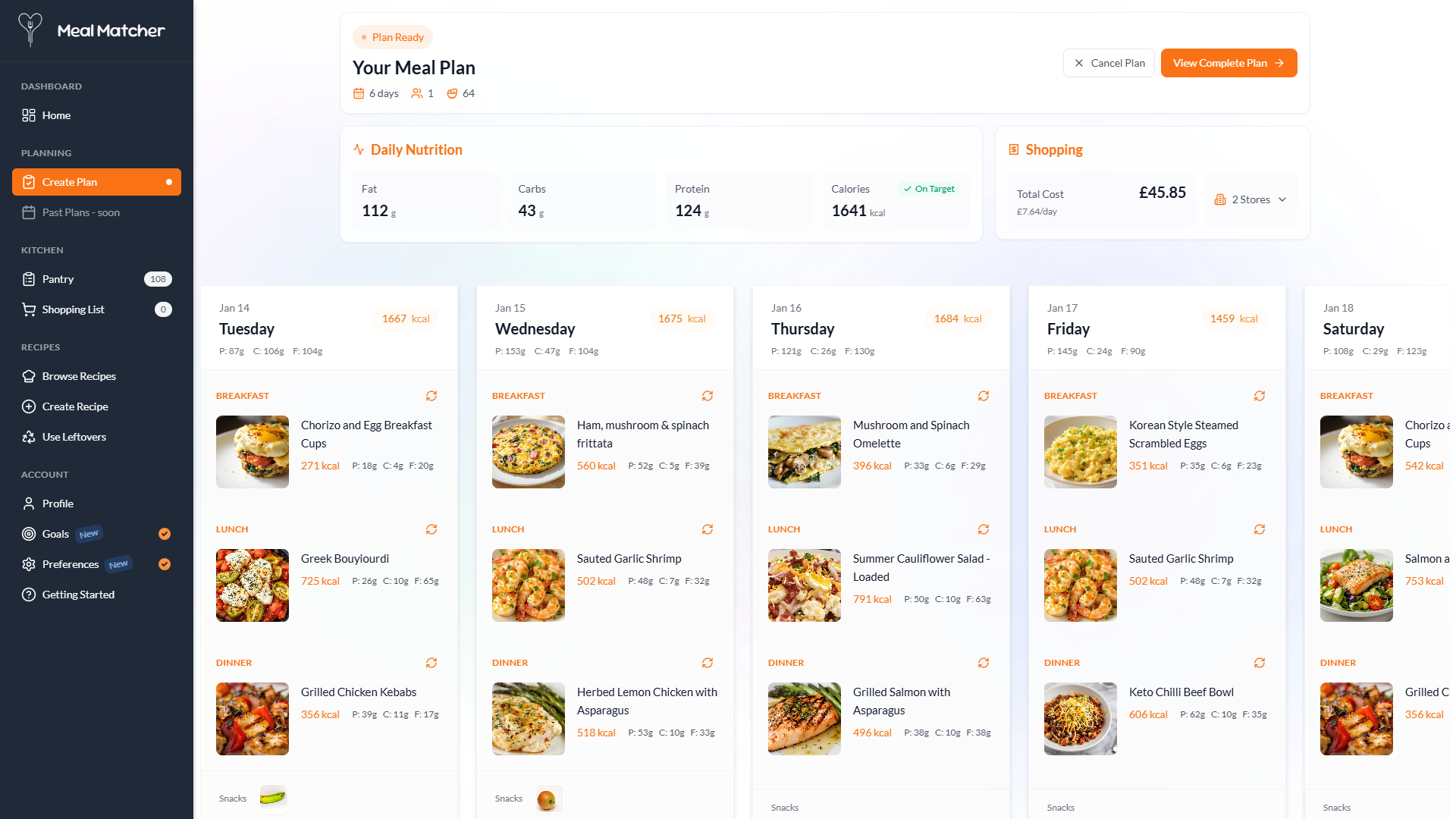
Stop planning meals in your head
Turn what you just read into an actual week of meals.
Meal Matcher builds a personalised week around your calories, diet, allergies and dislikes, then turns it into one organised UK shopping list.