The best meal planning app for Aldi shoppers: what to look for in 2026
Quick Answer
For Aldi shoppers, look for a meal planning app that can match meals to budget, keep ingredient lists short, and help you compare your plan against a real shopping list. If you shop Aldi every week, a supermarket-friendly planner makes sense. If you split shops between Aldi and elsewhere, use a tool that checks ingredients and compares lists properly.
If you shop at Aldi, the best meal planning app is one that keeps your weekly shop tight, makes good use of the ingredients Aldi actually sells, and helps you avoid ending up with odd leftovers you never meant to buy. For UK home cooks, the right choice is usually less about fancy recipe features and more about basket control, shopping lists and flexibility.
What does an Aldi shopper actually need from a meal planning app?
The main job is simple: help you plan meals that fit a normal Aldi shop without turning it into a puzzle. That usually means recipes with ordinary ingredients, repeat use of the same items across the week, and a shopping list that stays manageable.
For Aldi, that matters because a good plan should work around the way people actually shop. Most of us are not building a 12-course tasting menu. We are trying to feed a household, stay within budget and avoid buying three different half-used herbs because a recipe asked for them.
- Aldi-friendly meal ideas: recipes that use everyday supermarket ingredients, not niche items you will only ever use once.
- Budget planning: a way to keep the shop realistic before you get to the till.
- Basket size control: fewer unnecessary ingredients usually means less waste.
- Ingredient matching: a way to build meals from what you already have or what is easy to buy.
- Shopping-list comparison: useful when you want to check whether your plan actually fits your usual Aldi shop.
Which features matter most if you shop at Aldi every week?
If Aldi is your main supermarket, the best app is the one that helps you repeat a useful rhythm from week to week. That normally means planning around a small set of ingredients, reusing them across several meals, and keeping the list short enough that the shop stays straightforward.
In practical terms, that might look like this:
- chicken one night, then using the rest in wraps or a pasta dish
- a bag of potatoes that covers two dinners
- one pack of peppers split across fajitas and a traybake
- store cupboard basics reused instead of bought again for each recipe
This is where a supermarket-specific planner can be more useful than a generic recipe app. Generic apps can give you ideas, but they do not always help you shape a shop around one supermarket. If Aldi is your default, that extra focus saves time.
If you want a starting point built around Aldi shopping habits, take a look at the How to keep an Aldi basket small without making dinner repetitive Aldi shoppers often want a plan that feels efficient, not bland. The trick is to reuse ingredients in different formats so you are not starting from scratch every night. One pack of chicken can become a stir-fry, then a wrap filling later in the week. Potatoes can cover a roast-style meal one day and a quick traybake another. Peppers, onions and pasta are similar staples that can carry several meals if the planner is set up well. A meal planning app should help you spot those overlaps before you shop. That means it should not just list recipes one by one. It should make the basket smaller by showing where the same ingredient can do more than one job. For Aldi, that is a practical way to keep costs and waste under control without needing a long, complicated plan. A shopping-list comparator is especially helpful if you want to know whether your plan really matches the way you shop at Aldi. A recipe list can look reasonable on screen and still end up awkward in the trolley if it has too many separate items, too many small packs, or too much overlap with things you already have. Comparing lists helps you check whether the plan is tidy enough before you head out. This is also useful when you are deciding between Aldi and another supermarket. If one list is built around fewer ingredients and a more practical weekly shop, it may be easier to run through Aldi. If the list is more mixed or includes items you would rather source elsewhere, a comparator can show that quickly. For a UK household trying to keep food shopping simple, that kind of check is often more valuable than browsing more recipes. An ingredient matcher is the right choice when you do not want to plan from scratch. If you already have a few items in the fridge, or you have bought a standard Aldi pack size and want to use it efficiently, matching meals to ingredients is faster than building a full menu. It is also useful when you are trying to use up leftovers before they go to waste. For example, if you have half a pack of peppers, a bit of cooked rice and some basics from the cupboard, an ingredient matcher can help turn that into a meal idea instead of another forgotten container in the fridge. That makes it a strong option for households that want flexibility. It is especially helpful if you mix Aldi with other supermarkets, because it focuses on what you already have rather than locking you into one rigid shopping pattern. If you shop at Aldi every week, choose a planner that is clearly Aldi-friendly, keeps ingredients short and helps you build a repeatable basket. If you want to keep the shop as tidy as possible, a shopping-list comparator is a strong next step because it shows whether your plan actually fits a realistic Aldi trip. If you split shops between Aldi and other supermarkets, or you often cook from leftovers, an ingredient matcher may be the better fit. In practice, the best setup for many UK households is a mix: use an Aldi-focused planner for the main weekly shop, then use the ingredient matcher when you need to work with what is already in the house. That approach keeps the plan flexible without losing the budget benefits of shopping at Aldi. Look for Aldi-friendly meal ideas, budget planning, basket size control, ingredient matching and shopping-list comparison. Those features help you keep the shop realistic, avoid unnecessary extras and make better use of the ingredients Aldi actually sells. If Aldi is your main supermarket, a supermarket-specific planner is usually more useful because it helps shape your meals around one shop. A generic planner can still give ideas, but it may not help as well with keeping the list short and the basket aligned to Aldi shopping habits. Use an ingredient matcher if you want to build meals from what you already have or from a small set of easy-to-buy ingredients. It is especially useful if you split shopping between Aldi and other supermarkets, because it helps keep the plan flexible. Check whether the ingredients repeat across meals, whether the shopping list stays manageable, and whether the plan avoids lots of one-off items. A shopping-list comparator is a useful next step if you want to see whether the plan really fits your usual Aldi shop.Why shopping-list comparison is useful for UK Aldi trips
When an ingredient matcher is the better tool
A simple way to choose the right app for your shopping style
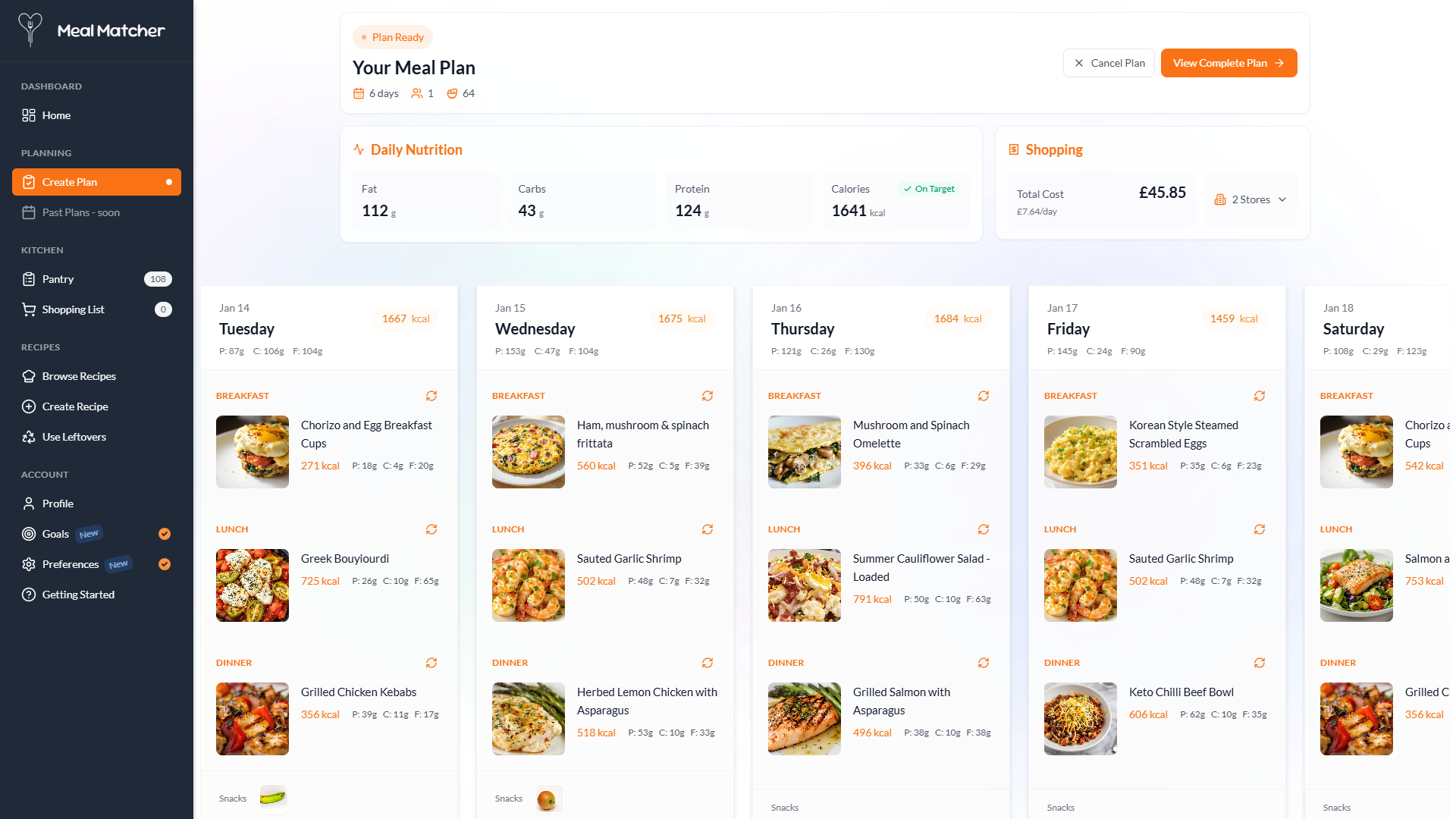
Useful MealMatcher tools and guides
Frequently asked questions
What should an Aldi shopper look for in a meal planning app?
Is a supermarket-specific planner better than a generic meal planner for Aldi?
When should I use an ingredient matcher instead of a meal planner?
How can I tell whether my meal plan will work for Aldi?
Stop planning meals in your head
Turn what you just read into an actual week of meals.
Meal Matcher builds a personalised week around your calories, diet, allergies and dislikes, then turns it into one organised UK shopping list.