Meal Matcher
Tesco’s AI meal-planning push: what it means for UK shoppers choosing a meal planner in 2026
Quick Answer
Tesco’s new AI assistant may be useful if you want meal ideas and a quicker way to turn them into a Tesco basket. A dedicated meal planner is still the better fit if you shop across different supermarkets, want more flexible ingredient planning, or need a broader comparison before you buy.
If you are searching for a Tesco meal planner app, the latest Tesco AI assistant is worth a look. It is being reported as a tool for meal-planning and basket-building inside the Tesco app, which may suit shoppers who already do most of their weekly shop there. The bigger question is whether that is enough on its own, or whether a standalone meal planner still gives you more control.
What has Tesco actually launched?
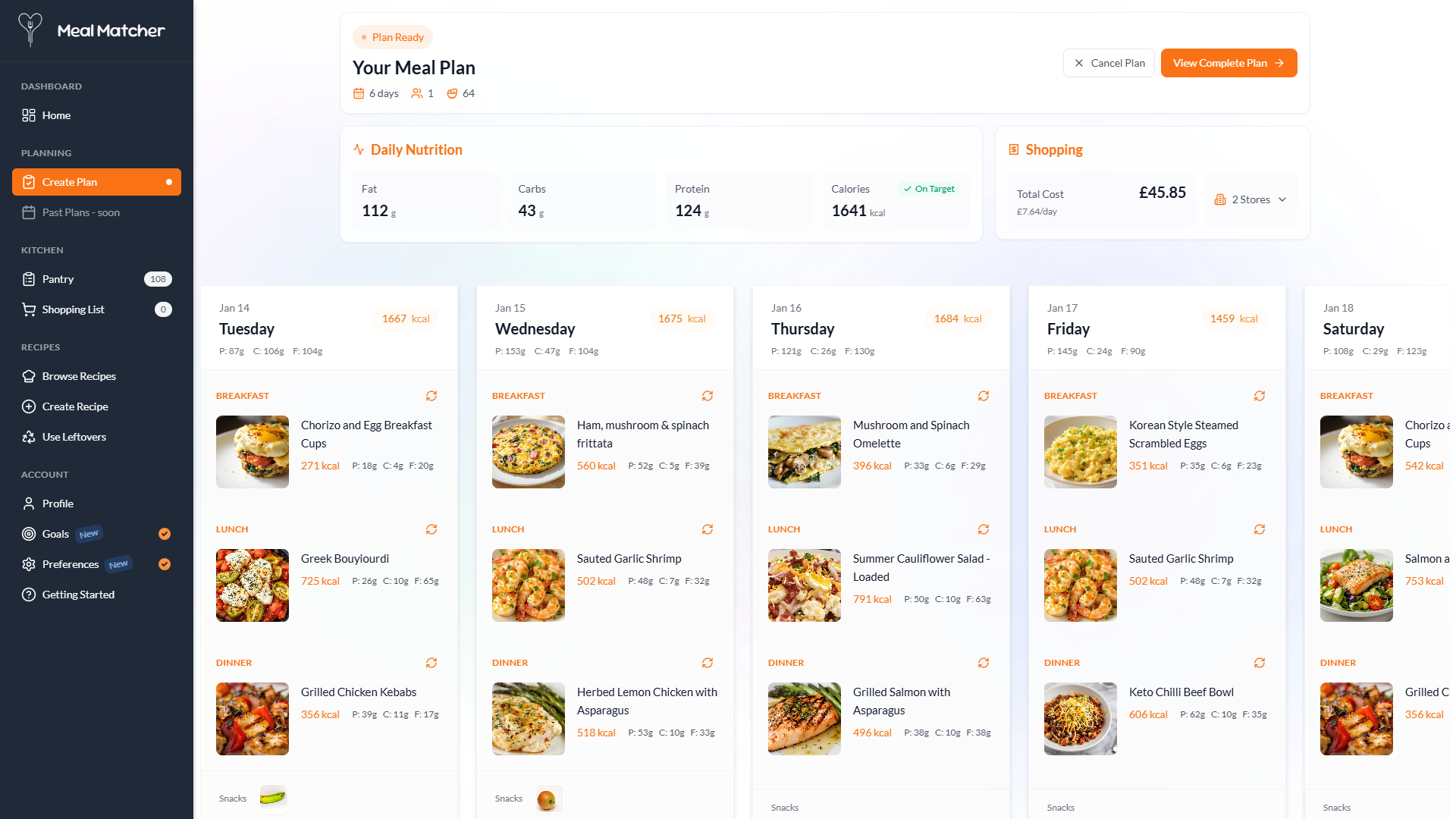
The reported change is a Tesco in-app AI assistant aimed at meal-planning and basket-building, with Tesco saying it has run a large-scale colleague trial to help customers, according to How the Tesco approach changes the first step For Tesco shoppers, the main appeal is speed. If an AI assistant can turn a meal idea into a basket inside the same app, that removes a few manual steps that people usually repeat every week: looking up recipes, adding ingredients, and checking what is missing. That is especially handy for routine shops where the same breakfast, lunch and dinner items come up again and again. The limitation is that this kind of planning starts from the supermarket you have already chosen. If you want to build meals around what is cheapest, what you already have in the cupboard, or what another supermarket stocks more reliably, a supermarket-native tool is less flexible. In other words, Tesco’s assistant looks strongest when the shop is already decided and you want the basket filled faster. A meal planner becomes more useful when it helps you think in real shopping units rather than just recipes. UK shoppers often have to work around pack sizes, so one ingredient may be sold in a quantity that does not neatly match a single meal. That matters if you are cooking for one or two people, or if you are trying to avoid paying for ingredients that will only be used once. Leftovers can make this easier or harder depending on the plan. If a recipe uses half a pack, a good planner should ideally help you reuse the rest later in the week, rather than leaving you with awkward extras. That is one area where a dedicated planner can be more helpful than a basket-building tool: it can keep track of ingredients across several meals, so you are less likely to buy separate items that do the same job. Tesco’s AI assistant may be useful if Tesco is already your default shop, but many UK households do not buy everything from one place. Some people split a shop between a main supermarket and a cheaper top-up shop, while others compare a few stores before deciding where to place the full basket. In those cases, a planner that is not tied to one retailer gives you more room to make the final choice. That flexibility is also useful when you are working with a tighter budget. If a plan only works when every ingredient is bought from one supermarket, you may lose the chance to swap in an alternative shop or change the ingredient mix. A standalone meal planner is better when you want to move from meal ideas to shopping options without being locked into one supermarket environment. Tesco’s AI push is most relevant for households that already rely on the Tesco app and want a simpler route from dinner idea to shopping basket. It may also suit anyone who values convenience over comparison, especially if the weekly shop tends to follow the same pattern and the main goal is to save time. If your shopping is more mixed, or if you want to compare supermarkets before you buy, a dedicated meal planner still has the edge. That is where Meal Matcher is useful: it lets you compare supermarkets and plan from ingredients, not just from one retailer’s basket builder. If you are deciding between convenience and flexibility, the best next step is to test both approaches on the same week’s meals and see which one fits your shopping habits better. This draft responds to current coverage from The Grocer, Tesco PLC, The Grocer. The practical meal-planning suggestions are MealMatcher's interpretation for UK home cooks. It is likely best for Tesco-heavy households that already do most of their weekly shop in the Tesco app. If you want meal ideas and a quicker path from plan to basket, it may be a useful fit. It is less compelling if you want to compare supermarkets before deciding where to shop. It may be enough if you mainly want meal ideas inside Tesco’s app and prefer a simple, supermarket-native experience. A dedicated meal planner still makes more sense if you want broader ingredient planning or a wider comparison before you buy. The choice depends on whether you value convenience or flexibility more. A standalone meal planner is more useful if you shop across different supermarkets and want more control over ingredients. It can also help when you want to compare options rather than stay inside one supermarket’s ecosystem. That makes it a better match for shoppers with mixed baskets or changing budgets. Start by deciding whether you mainly want in-app convenience or cross-supermarket planning. If you want broader comparisons, use Meal Matcher’s supermarket comparison and ingredient-based planning tools alongside Tesco’s app. If you are already loyal to Tesco, the Tesco tool may still be worth trying first.Pack sizes and leftovers are where planning gets practical
Why cross-supermarket flexibility still matters
Who this is for, and what to do next
Useful MealMatcher tools and guides
Why this topic is in the news
Frequently asked questions
Who is Tesco’s AI meal-planning tool best for?
Is Tesco’s tool enough if I only want meal ideas?
Why would I use a standalone meal planner instead of Tesco’s app?
What is the practical next step if I am comparing both options?
Stop planning meals in your head
Turn what you just read into an actual week of meals.
Meal Matcher builds a personalised week around your calories, diet, allergies and dislikes, then turns it into one organised UK shopping list.